
- All
- Product Name
- Product Keyword
- Product Model
- Product Summary
- Product Description
- Multi Field Search
English
Views: 0 Author: Site Editor Publish Time: 2026-01-19 Origin: Site


Play areas have evolved from simple activity zones into environments that shape physical skills, social awareness, and emotional confidence. Designers now look for elements that create deeper, longer engagement rather than brief, repetitive play. A playground Swivel Chair meets this need by introducing movement, choice, and shared experience into the space. Its rotational motion encourages interaction, cooperation, and imagination. In this article, you will learn how strategically using playground swivel chairs can enhance overall interactivity, support inclusion, and create more socially dynamic play areas.
A playground Swivel Chair naturally invites movement. Children do not sit passively; they twist, spin, and control motion using their bodies. This physical involvement keeps them engaged longer than static seating. Motion-based play activates balance systems and core muscles while maintaining a sense of fun. Because children control speed and direction, they stay curious and focused. This sense of control increases confidence and encourages repeated use. Over time, the swivel chair becomes a favorite activity rather than a short stop. For planners, this means higher engagement value per square meter of space.
Many play areas include seating that serves no play function. Replacing or supplementing these elements with a playground Swivel Chair transforms idle zones into active ones. Even small spaces gain energy when rotation is introduced. Children gather, watch others spin, and join in. This creates visual movement that attracts attention across the play area. The result is a dynamic zone that feels alive. Instead of directing play through signage, designers let motion guide behavior naturally. Interactivity increases without adding complex structures or digital elements.
A well-designed playground Swivel Chair appeals to a wide age range. Younger children enjoy gentle spinning, while older users explore faster, controlled motion. Children with different physical abilities can also engage at their own comfort level. Because there is no single “correct” way to use it, the swivel chair removes performance pressure. This flexibility encourages inclusive interaction without forced programming. Play becomes self-directed, adaptable, and welcoming. For operators, this means one piece of equipment supports multiple user groups simultaneously.
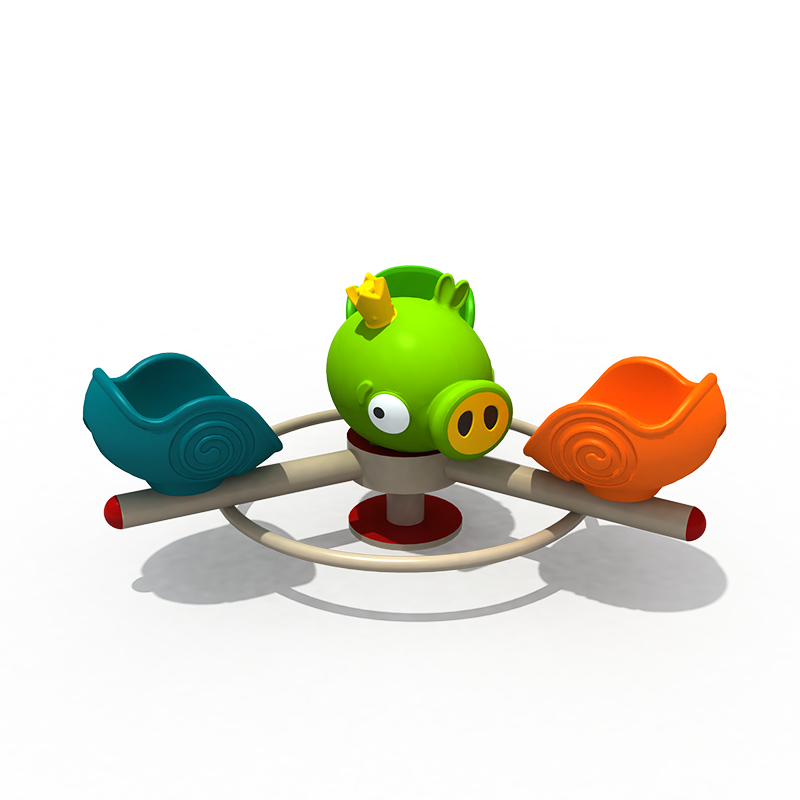
When multiple playground Swivel Chair units are placed together, they form natural gathering points. Children talk, laugh, and negotiate who spins next. These moments build communication skills through real interaction. Unlike single-user equipment, swivel chairs encourage face-to-face contact. Children watch reactions and adjust behavior accordingly. Over time, these hubs become social anchors within the play area. Designers can guide traffic flow simply by placing swivel chairs in visible, accessible locations. Social energy grows organically without adult direction.
Playground swivel chairs encourage cooperation through physical design rather than enforced rules. Capacity limits, rotational mechanics, and user-controlled motion naturally guide children to wait, share, and collaborate. These interactions feel authentic and help transform everyday play into meaningful social learning experiences.
Structured Application Table: How Playground Swivel Chair Design Supports Social Cooperation
| Design / Application Aspect | Practical Implementation | Impact on Social Behavior | Technical Indicators / Parameters (Reference-Based) | Planning & Operation Considerations |
|---|---|---|---|---|
| User Capacity | Single-user or 2–3 seat configurations | Encourages waiting, turn-taking, and peer negotiation | Typical capacity: 1–3 users; Design load: ≥90 kg per seat (commonly aligned with EN 1176) | Avoid high-capacity designs that reduce natural rotation of users |
| Motion Initiation Method | Requires external push to achieve higher rotation | Promotes cooperation and peer assistance | Starting torque typically ≤5–10 N·m (child-operable range) | Excessive force requirements may reduce participation |
| Rotational Damping | Controlled bearings or speed-limiting systems | Extends interaction time and reduces monopolization | Max rotational speed often limited to ≤30–40 rpm (safety-oriented range) | Over-damping can reduce engagement and play value |
| Seat Orientation | Face-to-face or circular seating layouts | Enhances eye contact and verbal communication | Typical seat spacing: 450–600 mm | Ensure clear sightlines and avoid back-to-back isolation |
| Natural Use Duration | Gradual deceleration after spinning | Creates a natural endpoint that supports turn exchange | Inertia decay time: approx. 10–20 seconds (design-dependent) | Unlimited spinning can discourage user turnover |
| Safety Clearance Zone | Defined impact-absorbing perimeter | Reduces conflict and maintains orderly play | Recommended clearance radius: ≥1.8–2.0 m | Insufficient spacing increases collision risk |
| Grouped Installation | 2–4 swivel chairs installed as a cluster | Encourages small-group collaboration and social bonding | Inter-unit spacing typically ≥2.5 m | Prevent crowding and circulation bottlenecks |
| Age-Range Flexibility | Open-ended use without fixed rules | Older children naturally guide younger peers | Common age range: 3–12 years | Visual cues should clarify safe and intuitive use |
Tip:For schools and public playground projects, selecting a playground Swivel Chair with limited capacity, cooperative motion initiation, and controlled rotation is more effective for building real turn-taking and teamwork skills than high-speed or high-capacity spinning equipment.
Shared motion creates strong emotional connections. When children spin together or help each other start movement, they bond through experience. This builds trust and confidence, especially for quieter children. A playground Swivel Chair offers low-risk social entry. A child can join by pushing, sitting, or watching. Gradually, they become active participants. This progression supports emotional growth and peer acceptance. Inclusive play becomes a lived experience rather than a design claim.
The rotational motion of a playground Swivel Chair stimulates the vestibular system. This system supports balance, posture, and spatial awareness. Regular vestibular input helps children refine body control during movement. As they spin, stop, and adjust, they learn how their bodies respond to force. This learning happens naturally, without instruction. Over time, children improve coordination and stability. For designers, this means adding developmental value without complex equipment.
Many children seek sensory input to regulate focus and emotion. A playground Swivel Chair offers controlled stimulation through predictable movement. Children choose how fast or slow to spin, which supports self-regulation. Gentle motion can calm overstimulation, while faster spins release energy. This adaptability makes the swivel chair suitable for diverse sensory needs. It creates a balanced play experience that supports both excitement and calm.
Spinning is not only physical. Children anticipate movement, judge distance, and plan actions. This engages cognitive processing alongside sensory input. Emotional responses also emerge as children experience excitement, joy, and shared laughter. The playground Swivel Chair becomes a multi-layered experience. It connects body, mind, and emotion in a single activity. This depth of engagement keeps children returning and exploring new ways to play.
Placement determines impact. Installing a playground Swivel Chair near climbing or running areas allows smooth transitions between activities. Children move from high-energy play to spinning without losing momentum. This keeps engagement continuous and reduces idle time. Visual connection between zones also encourages exploration. Children see others spinning and join in. The play area feels cohesive rather than fragmented.
Quiet zones benefit from gentle, predictable movement that supports self-regulation. Environmental psychology research indicates that slow, rhythmic motion can help reduce arousal levels and improve attention in children. When a playground Swivel Chair is placed in a calmer area, children naturally moderate rotation speed, using it for sensory regulation, observation, or recovery between high-energy activities. This supports emotional balance without isolating users from the play environment. For designers, integrating swivel chairs into quiet zones maintains engagement while preserving acoustic comfort and spatial harmony.
Choice is a key driver of intrinsic motivation in play. Studies on play behavior suggest that environments offering multiple comparable options increase exploration time and user satisfaction. A spin zone that includes varied playground Swivel Chair designs—differing in seat form, rotation response, or orientation—allows children to experiment and self-select experiences. This comparative play builds body awareness and decision-making skills. From a planning standpoint, clustered spin zones concentrate engagement, reduce scattered circulation paths, and improve supervision efficiency without sacrificing play diversity.
Inclusive swivel chair design is guided by universal design and pediatric ergonomics principles. A well-engineered playground Swivel Chair often features a seat height of about 430–480 mm to support safe transfers from mobility devices, along with backrests or lateral support for postural stability. A wide, low-center base improves rotational control and reduces unintended motion. These design choices allow children with limited balance or strength to participate independently. When children share the same equipment rather than using separate “special” features, inclusive play becomes normalized and socially meaningful.
Shared play emerges when equipment supports multiple interaction roles. Studies in inclusive play environments suggest that offering varied participation modes—active, assistive, and observational—reduces social exclusion. With a playground Swivel Chair, one child may initiate rotation, another may control speed, and another may contribute verbally to the play narrative. This layered participation encourages cooperation without forcing uniform physical performance. The design allows children to self-select roles based on ability and comfort, creating balanced social dynamics and authentic peer interaction.
Universal play design focuses on visibility, dignity, and equal opportunity. When inclusive equipment like a playground Swivel Chair is centrally placed and heavily used, it communicates that accessibility is standard, not exceptional. Research in community play spaces shows that visible inclusive elements increase cross-ability interaction and parental acceptance. By supporting physical, sensory, and social engagement in one element, swivel chairs help communities create play areas that reflect shared values, foster empathy, and encourage long-term social cohesion.
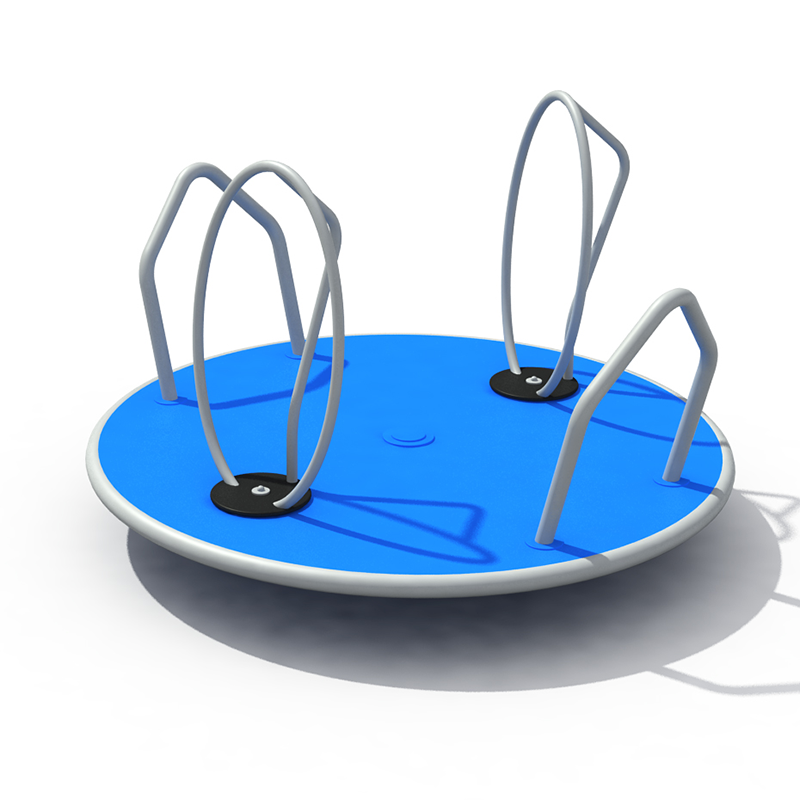
Rotational play supports symbolic thinking, a key stage in cognitive development identified in early childhood research. When children use a playground Swivel Chair, the spinning motion provides sensory feedback that helps anchor imagined roles in physical experience. This embodied play strengthens narrative sequencing, as children link movement with story progression. Group rotation often leads to shared language cues such as countdowns or role commands, which reinforce communication skills. The predictable circular motion also helps children organize play scenarios with clear beginnings and endings. When designers align swivel chairs with nearby thematic elements, they create environmental prompts that sustain longer, more complex storytelling without direct adult guidance.
When a playground Swivel Chair is intentionally paired with themed play structures, it shifts from a simple motion element into a storytelling device. Spatial alignment, visual cues, and functional proximity allow children to move fluidly between elements while sustaining imaginative narratives and role-based play.
| Theme Integration Dimension | Practical Design Approach | Play & Narrative Impact | Technical Indicators / Parameters (Fact-Based) | Planning & Design Considerations |
|---|---|---|---|---|
| Theme Type Alignment | Match swivel chair location with dominant theme (ship, space, city) | Gives the swivel chair a defined “role” in play stories | Common themes: nautical, space, transport, adventure | Avoid theme overload that confuses narrative intent |
| Functional Role Definition | Design chair as helm, cockpit, control pod, or lookout | Supports sustained role-play and storytelling | Seat height typically 350–450 mm to simulate “control position” | Role should be intuitive without signage |
| Spatial Proximity | Place swivel chair within 1.5–3.0 m of themed structure | Enables quick transitions while maintaining story continuity | Recommended distance: ≤3.0 m walking path | Excessive distance breaks imaginative flow |
| Sightline Connectivity | Ensure direct visual connection between elements | Reinforces narrative logic and spatial awareness | Clear sight angle ≥120° preferred | Avoid visual barriers such as panels or fencing |
| Material & Color Consistency | Use matching colors, textures, and finishes | Strengthens thematic immersion | UV-stable HDPE panels, powder-coated steel | Color contrast still required for safety visibility |
| Motion-Narrative Match | Align rotation speed with theme intensity | Enhances realism of pretend scenarios | Typical controlled rotation: ≤30 rpm | Overly fast motion disrupts narrative focus |
| Multi-Element Interaction | Allow movement between chair and structure during play | Encourages complex story-building | Transition time ideally <5 seconds | Paths must remain obstacle-free |
| User Orientation | Seat direction faces thematic focal point | Anchors storytelling and role focus | Seat orientation tolerance ±15° | Misalignment weakens narrative clarity |
| Group Role Capacity | Design for observer and operator roles | Supports collaborative storytelling | 1 active user + 1–2 nearby observers | Avoid overcrowding the chair itself |
Open-ended play elements such as a playground Swivel Chair support creativity by allowing multiple modes of use without predefined outcomes. Research in child development shows that unstructured play strengthens divergent thinking, where children explore many possible solutions rather than one correct answer. When children control motion, direction, and timing, they experiment with cause and effect, balance, and social roles. Some children use the chair independently to test physical limits, while others build group games around speed, rhythm, or storytelling. This adaptability extends the equipment’s relevance across ages and interests. For planners, open-ended design increases long-term play value and reduces reliance on trend-driven themes or frequent equipment replacement.
Playground swivel chairs enhance movement, social interaction, and creative play across all ages. They support sensory regulation, inclusive participation, and flexible use through smart design and placement. With durable structures and inclusive features, Attract Playground Equipment Co., Ltd. delivers playground swivel chairs that add long-term value, helping planners create engaging, safe, and future-ready play environments.
A: A playground Swivel Chair is rotating play equipment that supports movement, interaction, and imaginative play.
A: A playground Swivel Chair adds motion and shared use, encouraging cooperation and longer engagement.
A: A playground Swivel Chair promotes turn-taking, teamwork, and natural peer communication.
A: Place a playground Swivel Chair near active or quiet zones for flexible play transitions.
A: Yes, a playground Swivel Chair supports multi-ability participation through adaptable design.
A: Playground Swivel Chairs offer high engagement value with low maintenance and long service life.


