Introduction
Engineering projects demand more than off-the-shelf solutions, especially when scaling interactive play equipment. Bulk customization of Playground Swivel Chairs requires precise control over performance, safety, and manufacturability. Engineers, project managers, and procurement teams must align design intent with real production constraints. This article explains how to customize playground swivel chairs in bulk through structured engineering methods. You will learn how to translate requirements into specifications, manage materials and tooling, and achieve consistent results across large production runs.
Defining Engineering Objectives for Playground Swivel Chair Customization
Translating Project Requirements into Playground Swivel Chair Specifications
Every successful bulk program starts with clear engineering translation. A playground Swivel Chair is never just a seat; it is a load-bearing, rotating system exposed to weather and repeated use. Engineers convert site data, age range, usage intensity, and installation context into measurable specifications. These include seat diameter, base footprint, rotation limits, and material thickness. Clear specifications allow designers, suppliers, and inspectors to align early and work efficiently through each project phase.
Aligning Load, Motion, and Durability Targets at Scale
In bulk engineering customization, load capacity, rotational behavior, and long-term durability must be defined through measurable and verifiable parameters. Engineering teams translate real-world usage into quantified targets so every playground Swivel Chair performs consistently across sites, climates, and years of service. This structured approach supports safe scaling and repeatable manufacturing outcomes.
| Dimension | Application Context | Key Technical Metric | Typical Reference Range (Industry-Based) | Engineering Considerations |
| Static Design Load | Continuous single-user seating | Rated static load (kg / N) | 150–250 kg (≈1470–2450 N) | Commonly designed at ≥2.0× expected user weight for safety margin |
| Dynamic Load | Spinning, off-center seating | Dynamic safety factor | 2.5–3.5 (dimensionless) | Off-axis rotation increases combined axial and radial stress |
| Rotation Range | Interactive rotational play | Maximum rotation angle (°) | 360° continuous rotation | Must address entanglement risk through geometry or guarding |
| Rotational Control | Age-specific use zones | Starting torque (N·m) | 2–6 N·m (tunable) | Lower torque improves control for younger users |
| Bearing System | High-frequency rotation | Bearing rated load (kN) | 5–15 kN (sealed ball or tapered bearing) | Must support combined axial and radial loading |
| Usage Frequency | Public playground environments | Design cycle life (cycles) | ≥500,000 rotations | Used to estimate bearing wear and fatigue life |
| UV Resistance | Outdoor exposure | UV aging classification | ≥UV8 (ASTM G154 reference) | Plastics require UV stabilizers to prevent embrittlement |
| Metal Protection | Humid or rainy climates | Coating thickness (μm) | Powder coating 80–120 μm | Insufficient thickness reduces corrosion resistance |
| Design Service Life | Municipal project planning | Intended service life (years) | 10–15 years | Aligns with public infrastructure lifecycle expectations |
| Maintenance Assumption | Facility management | Maintenance interval (months) | ≥12 months | Sealed or self-lubricating systems reduce service needs |
Tip:For large-scale projects, these parameters should be embedded directly into technical specifications and procurement documents. Doing so helps lock performance expectations during OEM or ODM production and prevents performance variation between manufacturing batches.
Establishing Performance Benchmarks Before Bulk Production
Performance benchmarks act as technical guardrails for every playground Swivel Chair produced. These benchmarks may include rotation torque ranges, bearing lifespan expectations, coating thickness, and wear resistance values. Engineers validate benchmarks during prototype testing and formal design reviews. Once approved, they become fixed references for tooling, inspections, and quality audits, ensuring consistency from the first unit to the final shipment.
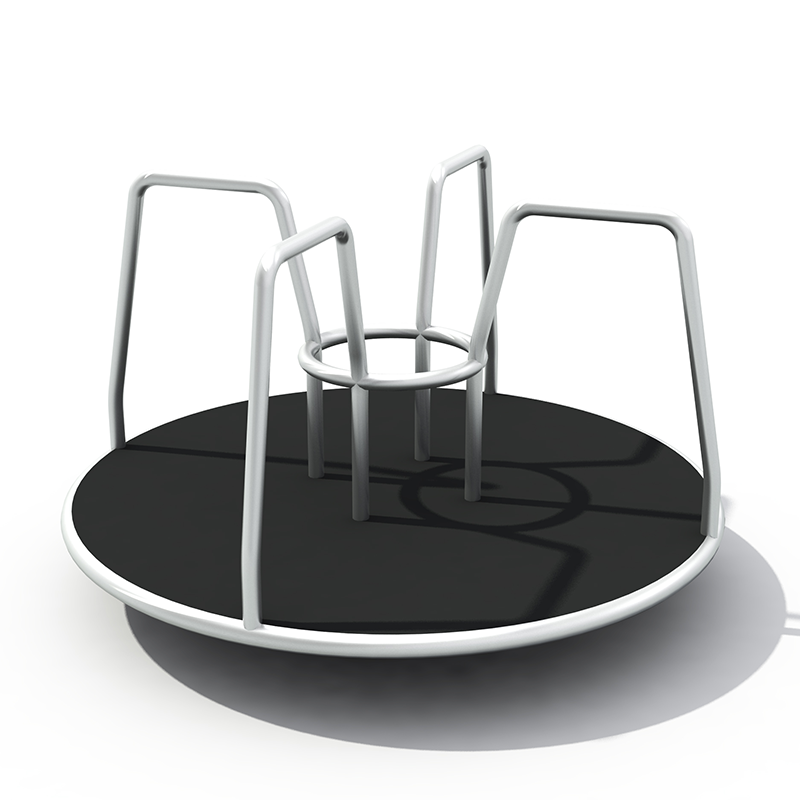
Customizing Playground Swivel Chairs in Bulk: Design-to-Production Workflow
CAD-Based Custom Design and Parametric Modeling for Playground Swivel Chairs
Bulk customization begins with CAD-driven design. Engineers rely on parametric modeling to control geometry, wall thickness, and rotation interfaces. This approach allows rapid adjustments without rebuilding entire models. When one dimension changes, related features update automatically. Parametric design supports efficient customization across multiple sites while preserving a stable engineering foundation for mass production.
Prototype Validation and Engineering Approval Cycles
Prototypes bridge digital design and physical performance. Engineers evaluate prototypes for stability, rotation smoothness, and assembly accuracy. Testing confirms that the Playground Rotating Seat performs as intended under realistic loads and motion patterns. Approval cycles often involve internal engineering review, safety validation, and stakeholder confirmation. Approved prototypes become the physical benchmark for tooling and production alignment.
Scaling from Approved Design to Consistent Bulk Manufacturing
Once a design is approved, manufacturers translate it into production tooling and processes. Engineers remain involved to ensure molds, fixtures, and assembly methods match the approved intent. First-article inspections confirm dimensional accuracy and performance. With proper process control, bulk manufacturing delivers consistent playground Swivel Chairs across extended production schedules and multiple batches.
Material and Structural Customization for Engineering-Grade Playground Swivel Chairs
Selecting UV-Resistant Plastics and Coated Metals for Long-Term Performance
Engineers evaluate materials using environmental exposure models rather than appearance alone. UV-stabilized polymers are selected based on additive type and expected radiation levels, while metal components follow corrosion protection classifications tied to humidity and salinity. Coating systems are specified with minimum thickness and adhesion requirements to control wear rates. This materials engineering approach ensures the playground Swivel Chair retains mechanical strength and visual quality throughout extended outdoor service.
Engineering the Swivel Mechanism for Stability and Smooth Rotation
Stability in rotation depends on precise mechanical integration. Engineers calculate combined axial and radial loads to select appropriate bearing types and sizes. Sealing systems are chosen to limit particle ingress without increasing friction. Mounting tolerances are controlled to maintain concentric alignment, which directly affects rotation smoothness. Through these measures, the Playground Rotating Seat delivers consistent motion while minimizing mechanical fatigue over long-term use.
Structural Reinforcement Strategies for High-Use Playground Swivel Chairs
Reinforcement strategies are guided by stress analysis rather than overbuilding. Engineers identify peak stress regions using load modeling and reinforce them with ribs, gussets, or embedded metal inserts. These features redistribute forces and reduce cyclic fatigue at critical joints. By integrating reinforcement into the base design, the playground Swivel Chair achieves higher load capacity and longer service life without unnecessary weight or visual complexity.
Safety, Compliance, and Reliability Built into Custom Playground Swivel Chairs
Designing Playground Swivel Chairs to Meet ASTM and Global Standards
Engineers treat safety standards as design inputs rather than final checks. ASTM requirements influence minimum clearances, allowable protrusions, and load distribution assumptions from the earliest concept stage. Global projects may also reference EN or ISO frameworks, requiring harmonized dimensions and material performance. By embedding these criteria into CAD rules and calculation models, teams reduce rework and ensure the playground Swivel Chair remains compliant across different regulatory environments.
Integrating Rounded Geometry and Controlled Motion by Design
Rounded geometry is selected using defined radius values that balance safety and manufacturability. Larger radii lower peak stresses and improve mold flow in plastic components. Controlled motion is achieved through bearing selection and friction tuning rather than add-on brakes. This integrated approach stabilizes rotation speed and improves user comfort while reducing wear on mechanical interfaces over time.
Engineering for Predictable Performance Across Large Production Runs
Predictable performance relies on statistical control rather than visual inspection alone. Engineers apply dimensional tolerances, process capability targets, and standardized assembly sequences. Critical characteristics such as rotation torque and bearing alignment are monitored at defined sampling intervals. This discipline ensures each playground Swivel Chair performs identically across batches, supporting reliable installation and long-term operation at scale.
Customization Options That Add Engineering and Project Value
Color, Form, and Site-Specific Geometry Customization
From an engineering perspective, visual customization must follow clear control rules. Color selection usually relies on standardized systems such as RAL or Pantone to ensure repeatability across batches and suppliers. Form and geometry adjustments are evaluated through CAD and stress analysis to confirm that aesthetic changes do not shift load paths or center of gravity. Site-specific geometry often responds to spatial constraints, fall zones, or surrounding equipment layouts, allowing visual integration while preserving identical structural and rotational performance across all units.
Functional Add-Ons Without Compromising Playground Swivel Chair Integrity
Functional add-ons are treated as secondary systems that must coexist with the primary structure. Engineers analyze how surface textures, grips, or ergonomic contours affect mass distribution and rotational inertia. Added features are positioned symmetrically or counterbalanced to avoid uneven bearing loads. Material selection for add-ons follows the same durability and UV resistance criteria as the main body, ensuring uniform aging. By validating add-ons during prototype testing, teams confirm that interaction benefits do not reduce structural reliability or rotational smoothness.
Designing Modular Variants for Multi-Zone Engineering Projects
Modular design supports complex sites with varied play zones. Engineers define a core platform—typically the base, bearing system, and mounting interface—then develop interchangeable seat shells or form elements. This modular logic allows size, color, or theme variation without redesigning load-bearing components. Standardized modules simplify tooling strategy, reduce spare part inventories, and streamline maintenance training. Over time, modular systems also enable phased expansions or replacements while maintaining compatibility with existing playground Swivel Chair installations.
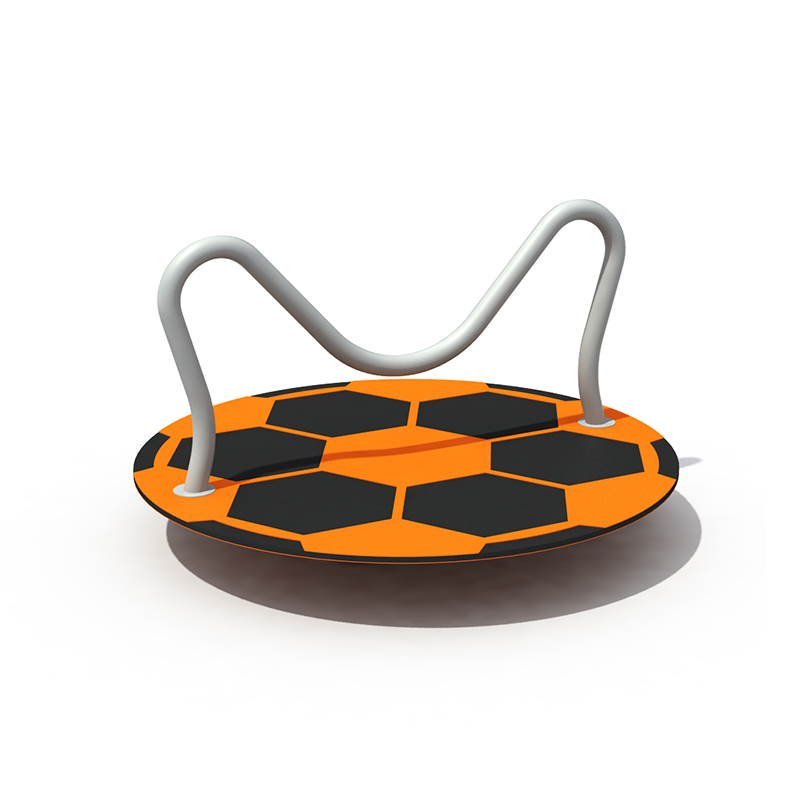
OEM and ODM Collaboration for Bulk Playground Swivel Chair Projects
Preparing Technical Drawings and Data Packages for Manufacturers
Clear documentation also functions as a technical control system throughout the project lifecycle. Beyond basic drawings, engineers include tolerance tables, surface finish requirements, material standards, and assembly sequences to eliminate interpretation gaps. Well-structured bills of materials define approved substitutes and revision histories, preventing unauthorized changes during production. When documentation follows recognized drafting and specification standards, it enables faster technical reviews, more accurate cost modeling, and consistent quality audits across different manufacturing batches and supplier facilities.
Managing MOQ, Tooling, and Custom Mold Development
In bulk playground Swivel Chair programs, tooling decisions directly affect cost control, lead time, and long-term consistency. Engineering teams must coordinate MOQ planning, mold design, and tool life assumptions with OEM and ODM partners to ensure the production strategy matches real project scale and lifecycle expectations.
| Category | Application in Bulk Projects | Key Technical Indicators | Typical Industry Ranges (Reference) | Engineering & Procurement Notes |
| Minimum Order Quantity (MOQ) | Initial mass production run | MOQ per mold (units) | 300–1,000 units (rotational or injection molds) | MOQ must amortize tooling cost without overstocking |
| Mold Type | Seat shell, base, or enclosure | Manufacturing process | Rotational molding / Injection molding | Process selection affects surface quality and unit cost |
| Mold Material | Long-term production tooling | Tool steel grade | P20, H13 steel / Aluminum molds | Steel molds suit high volume; aluminum suits medium volume |
| Tooling Investment | Project budgeting | Mold cost (USD) | $8,000–$40,000 per mold (process-dependent) | Cost varies by cavity count and geometry complexity |
| Tool Life Expectancy | Multi-year supply contracts | Tool life (cycles) | 50,000–200,000 shots | Must exceed total forecast volume plus contingency |
| Cavity Configuration | Production efficiency | Cavities per mold | 1–4 cavities | More cavities reduce unit cost but increase tooling risk |
| Dimensional Tolerance | Assembly and fit accuracy | Typical tolerance (mm) | ±0.5–1.5 mm (rotomolded parts) | Must align with bearing and frame interfaces |
| Lead Time | Project scheduling | Tooling lead time (weeks) | 6–12 weeks | Includes design review, fabrication, and sampling |
| Sampling & Approval | Engineering validation | First Article Inspection (FAI) | 1–3 sample rounds | Required before releasing full production |
| Ownership Agreement | Long-term supply control | Mold ownership terms | Buyer-owned / Supplier-held | Impacts future supplier flexibility and IP control |
Tip: When planning MOQ and tooling together, always compare projected lifetime volume against tool life rather than just first-year demand. This prevents unexpected retooling costs mid-project and supports stable pricing across long-term playground Swivel Chair programs.
Quality Assurance Systems for Bulk Playground Swivel Chair Orders
Quality assurance systems form the backbone of large-scale playground Swivel Chair production. Engineers establish QA plans that span the entire manufacturing cycle, starting with raw material certification and extending to functional testing of assembled units. Incoming inspections verify resin grades, steel composition, and coating thickness against specifications. In-process controls monitor critical steps such as bearing installation torque, weld integrity, and rotational smoothness. Final inspections combine visual checks, dimensional sampling, and rotation performance testing to confirm consistency. When QA data is recorded and traced by batch, it supports continuous improvement, regulatory compliance, and long-term reliability across all delivered units.
Conclusion
Customizing playground Swivel Chairs in bulk requires clear engineering goals, structured workflows, and strict quality control. When load, motion, materials, and compliance are planned early, projects gain predictable performance and scalable manufacturing. Attract Playground Equipment Co., Ltd. supports this process with durable playground Swivel Chairs, stable rotating mechanisms, and flexible OEM and ODM services. Their engineering-focused customization helps clients achieve safety compliance, production efficiency, and long-term value across diverse playground and infrastructure projects.
FAQ
Q: What are Playground Swivel Chairs in engineering projects?
A: Playground Swivel Chairs are engineered Playground Rotating Seat systems designed for controlled rotation, durability, and bulk production.
Q: How do you customize Playground Swivel Chairs in bulk?
A: Engineers customize Playground Swivel Chairs through CAD design, material selection, prototyping, and standardized manufacturing workflows.
Q: Why choose Playground Swivel Chairs instead of standard seats?
A: Playground Swivel Chairs offer controlled motion, higher load capacity, and better long-term performance than basic Playground Rotating Seat designs.
Q: How is safety ensured for Playground Swivel Chairs?
A: Playground Swivel Chairs follow ASTM standards, controlled rotation limits, and reinforced structures for safe Playground Rotating Seat use.
Q: What affects the cost of bulk Playground Swivel Chairs?
A: Cost depends on tooling, materials, MOQ, and QA requirements for each Playground Rotating Seat configuration.
Q: Can Playground Swivel Chairs support modular playground layouts?
A: Yes, Playground Swivel Chairs often use modular bases, allowing flexible Playground Rotating Seat layouts across large projects.


