Introduction
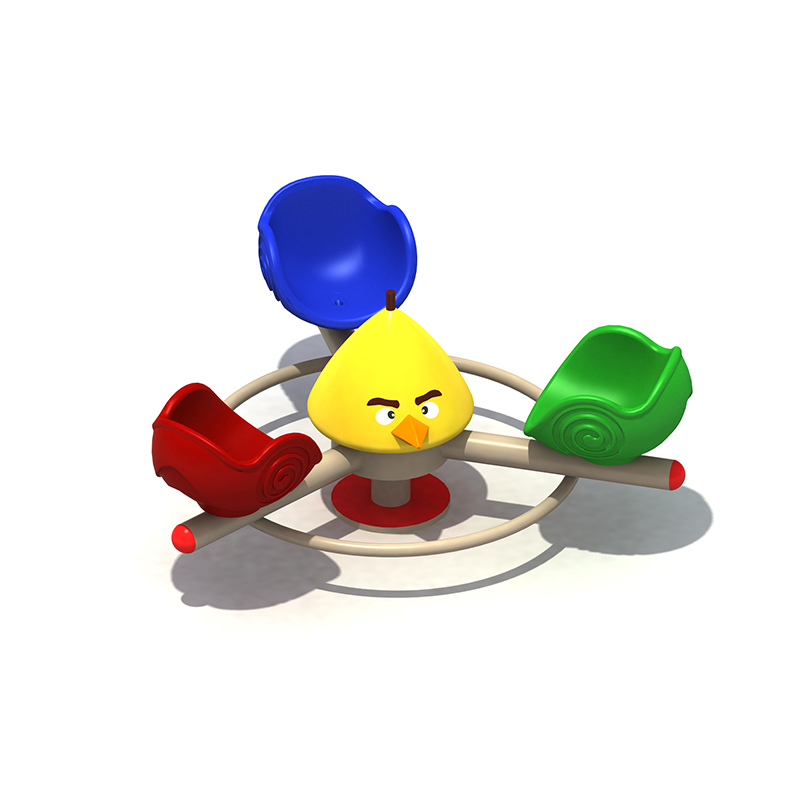
A playground Swivel Chair may appear simple, yet its function changes significantly by environment. In kindergartens, it supports structured learning, sensory development, and guided movement. In community playgrounds, it becomes a social hub for free play and interaction. Understanding these differences is essential for educators, planners, and designers. In this article, you will learn how context influences design decisions, supervision models, spatial planning, and long-term performance, helping you apply the right playground Swivel Chair solution for each setting.
Core Application Differences of Playground Swivel Chairs Across Settings
Educational play objectives in kindergarten environments
In kindergarten settings, a playground Swivel Chair supports learning through movement. Teachers often integrate it into daily routines that strengthen balance, coordination, and focus. The rotation helps children explore motion while staying grounded. It also aligns with early childhood education goals that link physical activity to cognitive growth. Because play sessions are planned, the swivel chair becomes a teaching aid rather than free-play equipment. Its use fits lesson structures, short activity cycles, and calm transitions between tasks. This intentional role shapes how educators evaluate its value and placement.
Recreational and social play focus in community playgrounds
In community playgrounds, a playground Swivel Chair functions primarily as a social and recreational hub rather than an instructional tool. Because it is used freely by mixed-age groups and often by multiple children at once, its application requires clearly defined design, performance, and spatial parameters to support safe, engaging, and repeatable social play.
| Application Dimension | Practical Use in Community Playgrounds | Key Technical Indicators (Industry-Referenced Ranges) | Design & Operational Considerations |
| User group | Primarily children aged 5–12, often mixed-age use | Design height range: 110–150 cm;
multi-user tolerance required | Avoid designs that only fit one narrow age band |
| Social interaction | Encourages shared spinning and turn-taking | Typical seat count: 1–4 seats;
minimum seat spacing ≥ 300 mm | Seat layout should minimize limb collision |
| Load capacity | High-frequency, multi-user loading | Rated load per seat: 45–70 kg;
total static load ≥ 200 kg | Dynamic loads must be considered, not only static weight |
| Rotational performance | Sustains cooperative and continuous spinning | Maximum rotational speed ≤ 25 rpm (common public-play limit);
start torque < 5 N·m | Rotation should remain smooth but controlled |
| Material selection | Designed for long-term outdoor exposure | Central post: galvanized or stainless steel;
seat panels: HDPE ≥ 15 mm thick | Materials must resist UV, moisture, and impact |
| Visual prominence | Acts as a social focal point | Overall height: 600–900 mm;
high-contrast color finishes | Visibility supports remote adult supervision |
| Spatial placement | Installed in open or semi-open zones | Minimum use-zone radius ≥ 1.8 m | Keep clear of swing arcs and slide exits |
| Usage intensity | Continuous daily public use | Estimated daily cycles (verification needed): >100 | Fatigue resistance is critical at design stage |
| Maintenance profile | Managed under public maintenance schedules | Bearing inspection interval: 6–12 months;
fastener checks quarterly | Designs should minimize maintenance complexity |
Tip:For community playground projects, prioritize multi-user load ratings, rotational control parameters, and use-zone clearance. These factors directly influence how well a playground Swivel Chair performs as a durable and safe social play element under heavy public use.
How context shapes the functional role of a playground Swivel Chair
Context determines function. In kindergartens, the playground Swivel Chair fits structured routines and developmental targets. In community playgrounds, it supports open exploration and social energy. These differences affect how stakeholders define success. Educators value predictability and learning alignment. Community planners value engagement and shared use. Understanding this distinction helps decision-makers avoid one-size-fits-all thinking. When context leads the decision, the swivel chair delivers stronger outcomes for users and operators alike.
Age-Specific Design Priorities for Playground Swivel Chairs
Kindergarten-oriented playground Swivel Chair sizing and ergonomics
Kindergarten users need equipment that matches smaller bodies and developing motor skills. A playground Swivel Chair in this setting often emphasizes lower seat height and supportive posture. These features help children feel secure while exploring rotation. Ergonomic design supports balance without overwhelming sensory input. The goal is confidence, not intensity. Designers focus on proportions that encourage repeated use and smooth movement. This careful sizing aligns with early childhood growth patterns and classroom-based play cycles.
Broader age-range accommodation in community playground swivel chairs
Community playgrounds serve wider age groups. A playground Swivel Chair here must welcome both younger children and older users. Designers often adjust seat shape, spacing, and load capacity to support varied play styles. The chair becomes a shared experience rather than a single-user tool. This flexibility encourages inclusive play without changing the core spinning function. Age diversity influences how planners evaluate flow, spacing, and adjacent equipment, ensuring the swivel chair integrates smoothly into the overall layout.
Matching rotational intensity to developmental stages
Rotation affects children differently at each stage. In kindergartens, gentle spinning supports sensory awareness and balance learning. In community playgrounds, faster rotation often fuels excitement and peer interaction. A playground Swivel Chair must match these expectations through controlled design choices. The right intensity supports comfort and enjoyment while encouraging repeated play. When rotational behavior aligns with developmental needs, the equipment feels intuitive and rewarding for users.
Supervision Models and Usage Patterns
Guided and teacher-led use of playground Swivel Chairs in kindergartens
In kindergartens, structured supervision allows the playground Swivel Chair to be integrated into intentional movement programs. Teachers often use it in small groups, limiting users to one or two children per cycle to maintain control. Sessions may be scheduled during outdoor learning blocks to support balance training or sensory regulation. Observation-based adjustments help teachers match rotation speed to each child’s tolerance. This guided approach reduces unpredictable behavior and aligns physical play with educational pacing and developmental objectives.
Independent and peer-driven use in community playgrounds
In community playgrounds, children self-organize around the playground Swivel Chair without adult direction. They negotiate entry, exit, and spinning roles through social cues rather than instruction. This autonomy encourages problem-solving and cooperative decision-making. Designers anticipate irregular usage patterns, including sudden crowding or rapid transitions between users. As a result, intuitive geometry, clear access points, and stable rotation performance become essential to support safe, self-directed play throughout the day.
How supervision level influences application planning
Supervision expectations directly influence layout and specification decisions. In supervised kindergarten settings, planners can define tighter use zones and closer equipment groupings. In community environments, wider clearances and unobstructed sightlines support passive monitoring from a distance. Research in playground design shows that visibility reduces conflict and misuse. Aligning a playground Swivel Chair’s placement with supervision realities ensures consistent performance and supports safe play behavior across different environments.
Safety Standards and Compliance Contexts
Controlled safety frameworks for kindergarten playground Swivel Chairs
Kindergarten environments follow internal safety policies and educational guidelines. A playground Swivel Chair here fits within controlled routines and managed groups. Staff training and daily inspection support consistent use. The focus is alignment with school standards rather than public access rules. These frameworks allow educators to integrate the swivel chair confidently into learning schedules and outdoor activities.
Public-use safety requirements shaping community playground installations
Community playgrounds operate under public-use expectations. A playground Swivel Chair must meet recognized standards for shared access and frequent use. Planners consider long-term exposure, varied user behavior, and seasonal traffic. Compliance influences placement, spacing, and anchoring methods. These factors ensure the swivel chair performs well across diverse conditions while remaining inviting to all users.
Application-driven differences in material and structural choices
Material and structural decisions for a playground Swivel Chair are closely tied to how and where it is used. Kindergarten environments favor comfort and controlled interaction, while community playgrounds demand robustness, wear resistance, and visual clarity. These differences translate into measurable choices in materials, thicknesses, finishes, and structural design.
| Design Aspect | Kindergarten Application | Community Playground Application | Key Technical Indicators (Typical / Referenced Ranges) | Practical Notes |
| Seat surface material | Prioritizes tactile comfort and warmth | Prioritizes durability and vandal resistance | Kindergarten: molded HDPE or rubberized polymer;
Community: HDPE, roto-molded plastic | Softer textures suit guided play; harder surfaces suit heavy use |
| Seat panel thickness | Lower mechanical stress, lighter users | Higher stress from multi-user loading | Kindergarten: 12–15 mm HDPE;
Community: 15–20 mm HDPE | Thickness correlates with impact resistance and lifespan |
| Structural frame material | Moderate-duty structural steel | Heavy-duty steel for public environments | Kindergarten: carbon steel, wall thickness ~2.5–3.0 mm;
Community: galvanized steel, 3.0–4.0 mm | Public installations require higher fatigue tolerance |
| Central rotation shaft | Designed for controlled, low-speed use | Designed for frequent, continuous rotation | Shaft diameter: 30–40 mm (kg environment);
40–50 mm (community) | Larger diameters reduce wear under dynamic loads |
| Bearing system | Low-noise, low-speed bearings | High-cycle, sealed bearings | Load rating (radial): 3–5 kN (kg);
5–8 kN (community) | Sealed bearings reduce maintenance intervals |
| Surface finish | Soft-touch coatings or rounded edges | Abrasion-resistant coatings | Powder coating thickness: 60–80 μm (kg);
80–120 μm (community) | Thicker coatings improve corrosion resistance |
| Edge and profile design | Rounded, child-friendly contours | Reinforced edges and profiles | Minimum edge radius: ≥ 3 mm (kg);
≥ 5 mm (community) | Larger radii reduce wear and surface chipping |
| Visual cues | Calming colors, low contrast | High-contrast colors for visibility | LRV contrast (verification needed):
kg: moderate;
community: high | Visibility supports passive supervision |
| Fastening hardware | Reduced access, tamper-limited | Fully tamper-resistant | Stainless steel fasteners A2/A4;
anti-loosening torque ≥ 20 N·m | Public sites require theft and tamper deterrence |
| Expected service life | Shorter daily use cycles | Continuous daily public use | Design life (reference):
kg: 8–10 years;
community: 10–15 years | Service life assumptions guide material cost decisions |
Tip:When specifying a playground Swivel Chair, align material thickness, bearing load ratings, and surface finishes with the expected daily use cycles and user density. Overbuilding kindergarten equipment adds cost, while underbuilding community installations increases maintenance pressure.
Inclusivity and Developmental Value in Each Setting
Sensory integration and balance development in kindergarten applications
In kindergarten environments, a playground Swivel Chair is often used as part of sensory-based movement routines. Slow, controlled rotation stimulates the vestibular system, which plays a key role in balance, posture, and spatial awareness. Educators may introduce short rotation cycles, typically lasting 10–20 seconds, to help children process movement without overstimulation. Consistent exposure supports core muscle activation and bilateral coordination. Over time, children learn to anticipate motion and adjust body position, reinforcing both physical control and emotional regulation within structured play sessions.
Social interaction and cooperative play in community playgrounds
Within community playgrounds, the playground Swivel Chair naturally encourages cooperative behavior. Multiple users must coordinate timing, body position, and effort to maintain smooth rotation. This shared control promotes communication and turn-taking, which are foundational social skills. Research on group play suggests that equipment requiring mutual action increases peer engagement duration. The swivel chair’s circular orientation also supports face-to-face interaction, strengthening social awareness. As a result, it becomes a catalyst for inclusive group play rather than isolated activity.
Inclusive design features adapted to each environment
Inclusive design strategies vary by setting but share common principles. In kindergartens, lower entry heights and supportive seating allow children with differing motor skills to participate comfortably. In community playgrounds, wider platforms and multiple grip points accommodate users of varied abilities and ages. Designers often follow universal design concepts, ensuring intuitive use without instruction. When a playground Swivel Chair integrates these features, it reduces participation barriers and supports equitable play experiences across developmental stages.

Installation Environment and Spatial Planning
Kindergarten playground Swivel Chair placement within compact play zones
In kindergarten settings, spatial efficiency drives placement decisions. A playground Swivel Chair is usually positioned within a clearly defined activity cluster that supports calm, repeatable play. Designers often align it with balance beams, low climbers, or sensory panels to form a continuous movement sequence. Recommended clear circulation widths typically range from 1.2 to 1.5 meters, allowing children and supervisors to move safely without overlap. Proximity to primary sightlines enables constant observation, while consistent surface transitions reduce trip risk and maintain predictable play patterns.
Open-space planning for community playground swivel chairs
Community playgrounds allow greater flexibility, but placement still follows functional logic. A playground Swivel Chair is frequently located at the intersection of multiple pathways to maximize accessibility and visibility. Designers often use a minimum open radius of 1.8 to 2.0 meters to support multi-directional entry and group use. Visual openness helps caregivers monitor play from a distance. Surrounding it with complementary social equipment encourages gathering behavior and reinforces the swivel chair as a shared activity node within the landscape.
Surface and layout considerations influencing application effectiveness
The performance of a playground Swivel Chair is strongly influenced by the ground surface and surrounding layout. In kindergartens, surfaces and spacing favor control and visibility. In community playgrounds, they support movement flow, higher traffic, and diverse play behaviors. These choices can be defined with clear, technical criteria.
| Design Dimension | Kindergarten Application | Community Playground Application | Key Technical Indicators (Referenced / Common Standards) | Practical Planning Notes |
| Primary surfacing type | Poured-in-place (PIP) rubber | PIP rubber or engineered wood fiber (EWF) | PIP thickness: 40–75 mm (depending on fall height);
EWF depth: ≥ 300 mm | Kindergartens prefer uniform surfaces; communities may balance cost and performance |
| Critical fall height (CFH) | Lower due to controlled use | Higher due to varied user behavior | Kindergarten CFH: ≤ 1.0 m;
Community CFH: 1.0–1.5 m | Surface selection must match equipment fall height |
| Surface firmness | Predictable, stable footing | Impact-attenuating with slight energy absorption | G-max value: ≤ 200 (ASTM F1292 reference) | Consistent firmness supports balance and supervision |
| Use-zone radius | Compact and clearly defined | Larger and more flexible | Kindergarten: ≥ 1.5 m radius;
Community: ≥ 1.8–2.0 m radius | Larger zones reduce collision risk in free play |
| Spatial visibility | Direct line-of-sight for teachers | Distributed sightlines for caregivers | Visual clearance angle: ≥ 180° around equipment | Open layouts support passive supervision |
| Circulation flow | Linear and controlled | Multi-directional and exploratory | Minimum clear path width: 1.2 m (ADA common reference) | Avoid placing swivel chairs in traffic bottlenecks |
| Adjacent equipment spacing | Close grouping by function | Functional separation by activity type | Distance to dynamic equipment (swings): ≥ 3.0 m | Reduces interference between play behaviors |
| Drainage performance | High priority for daily routines | Designed for varied weather exposure | Surface slope: 1–2% for drainage | Poor drainage affects surface longevity and safety |
| Boundary definition | Visual and physical boundaries | Open boundaries with visual cues | Color contrast or edging width: ≥ 50 mm | Boundaries help children anticipate play zones |
| Maintenance impact | Low debris, easy cleaning | Higher debris tolerance | Cleaning cycle: weekly (kg);
biweekly or monthly (community) | Maintenance planning should match surface choice |
Tip:When planning a playground Swivel Chair installation, align fall height, use-zone radius, and surface attenuation values early in the design process. Adjusting layout after installation is far more costly than selecting the right surface and spacing from the start.
Conclusion
The application of a playground Swivel Chair varies by environment and intent. Kindergartens prioritize guided learning, supervision, and developmental support, while community playgrounds emphasize social interaction, flexibility, and shared use. These differences influence design, layout, materials, and planning strategies. When context guides selection, the same play element delivers greater value. With this approach, Attract Playground Equipment Co., Ltd. provides thoughtfully engineered swivel chairs that combine durability, inclusive design, and reliable performance, helping schools and communities achieve safe, engaging, and long-lasting play spaces.
FAQ
Q: What is a playground Swivel Chair used for in kindergartens?
A: A playground Swivel Chair supports guided learning, balance training, and supervised sensory movement.
Q: How does a playground Swivel Chair function in community playgrounds?
A: A playground Swivel Chair encourages social play, cooperation, and free exploration among mixed-age users.
Q: Why does playground Swivel Chair design differ by setting?
A: Different supervision levels and play goals require tailored playground Swivel Chair design choices.
Q: Is a playground Swivel Chair suitable for multiple age groups?
A: Yes, a playground Swivel Chair can be adapted through sizing, load capacity, and layout planning.
Q: What affects the cost of a playground Swivel Chair?
A: Materials, structural strength, safety standards, and installation environment influence pricing.
Q: How do planners choose the right playground Swivel Chair?
A: They assess user age, supervision, space, and expected play behavior.


