
- All
- Product Name
- Product Keyword
- Product Model
- Product Summary
- Product Description
- Multi Field Search
English
Views: 0 Author: Site Editor Publish Time: 2026-01-11 Origin: Site


Installation methods play a decisive role in how a playground Swivel Chair performs in real play environments. Even well-designed equipment can lose safety value if installation ignores stability, alignment, or ground conditions. Poor installation often leads to imbalance, unpredictable motion, and long-term structural stress. In this article, we examine how different installation methods directly influence safety performance, and how correct practices improve stability, extend service life, and create safer, more reliable play experiences in public playgrounds.
Installation quality defines how a playground Swivel Chair handles daily dynamic loads. When anchoring depth, footing size, and base preparation are correctly executed, the structure distributes forces evenly into the ground. This stability prevents lateral shifting during rotation and keeps movement predictable. If these elements are precisely installed, the chair maintains its designed balance under repeated use. Stable foundations also protect bearings and rotating components from uneven stress, helping the equipment perform as intended over time while supporting consistent safety outcomes.
Correct installation acts as the first protective layer against common playground risks. A properly secured Playground Swivel Chair resists tipping and excessive sway during active play. Controlled movement reduces unexpected impacts that can occur when equipment shifts under load. Installation accuracy also ensures that motion stays within safe design limits. By addressing safety at the installation stage, operators reduce reliance on later corrective measures and create a safer baseline before children ever use the equipment.
Installation methods support broader playground safety principles such as fall prevention and controlled motion. When a Playground Swivel Chair is installed level and correctly anchored, it complements protective surfacing systems and defined use zones. Proper installation also aligns with widely recognized safety guidance emphasizing secure foundations and predictable equipment behavior. These principles work together, ensuring the chair integrates smoothly into the overall playground system rather than becoming an isolated risk point.
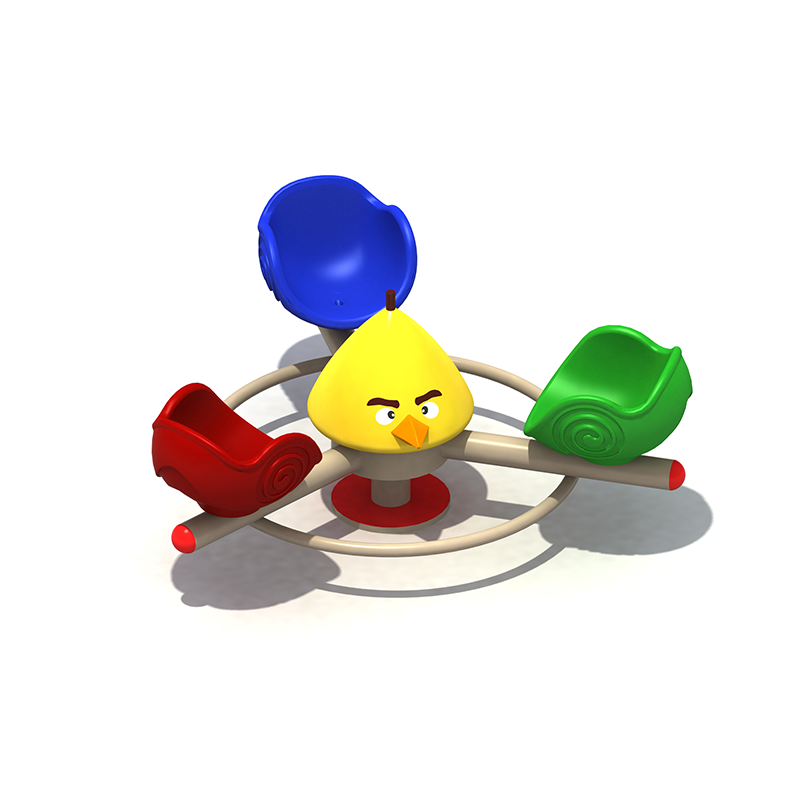
Ground preparation begins with understanding soil conditions. Soil type and compaction directly affect how well a Playground Swivel Chair remains stable over time. Dense, well-compacted soil supports consistent load transfer from the base into the ground. This prevents gradual sinking or tilting that could alter rotation behavior. Proper assessment ensures the foundation matches expected usage intensity, creating a reliable base that supports long-term safety and predictable equipment performance.
Effective drainage protects installation integrity. Water accumulation around footings can weaken soil and accelerate corrosion in metal components. During installation, proper grading and drainage layers help channel water away from the Playground Swivel Chair base. This keeps anchors secure and maintains consistent ground support. Moisture control also preserves bearing performance, ensuring smooth rotation without resistance caused by environmental damage.
A well-designed base layer supports both stability and durability. Prepared sub-bases using compacted aggregate provide uniform support beneath Playground Swivel Chairs. This design minimizes differential movement and reduces stress on rotating parts. Compared to minimal base preparation, structured layers deliver more consistent performance under repeated play cycles. Over time, this approach sustains safe motion and lowers the risk of performance changes linked to ground settlement.
Anchoring choice strongly influences how a Playground Swivel Chair behaves under rotational and lateral loads. In-ground and surface-mounted systems differ in load transfer, installation depth, and long-term stability. Understanding these differences helps project teams select anchoring solutions that match site conditions, usage intensity, and safety expectations.
| Comparison Aspect | In-Ground Anchoring | Surface-Mounted Anchoring | Typical Technical Indicators (Examples) | Units | Application Guidance | Key Notes |
|---|---|---|---|---|---|---|
| Load transfer mechanism | Loads transferred directly into soil through footing | Loads distributed through base plate into concrete slab | Footing diameter ≥ 400 mm (in-ground); base plate thickness ≥ 10 mm (surface-mounted) | mm | Parks, permanent installations / Retrofit sites, rooftops | Load path clarity is critical for rotation stability |
| Resistance to rotational forces | Very high due to embedment depth | High if slab thickness and anchors are adequate | Design rotational moment capacity ≥ 2.0 kN·m (site-specific, verify) | kN·m | High-use Playground Swivel Chairs | Values depend on equipment geometry and use intensity |
| Installation depth / thickness | Requires excavation and concrete footing | Requires structural concrete slab | Embedment depth ≥ 200–300 mm; slab thickness ≥ 150–200 mm | mm | New builds / Existing hardscape areas | Insufficient depth reduces long-term stability |
| Anchoring hardware | Cast-in or post-installed anchor bolts | Mechanical or chemical anchors | Anchor bolt diameter typically M16–M20 | mm | Public playground equipment | Anchor selection must follow manufacturer data |
| Construction tolerance sensitivity | Moderate, soil variability matters | High, slab flatness and strength critical | Slab flatness ≤ 3 mm over 1 m (typical construction tolerance) | mm | Urban plazas, indoor or semi-outdoor sites | Uneven slabs affect rotation alignment |
| Maintenance implications | Low movement, fewer retightening cycles | Periodic anchor torque checks required | Recommended torque check interval: 6–12 months | months | Facility-managed playgrounds | Surface anchors more accessible but need monitoring |
| Adaptability and relocation | Limited once installed | Easier removal or relocation | Removal without footing demolition possible (surface-mounted) | — | Temporary or phased projects | Consider lifecycle flexibility early |
| Compatibility with surfacing | Integrates well with loose-fill and unitary surfacing | Best with unitary or hard surfacing | Finished surface gap ≤ 5 mm around base | mm | EPDM, rubber tiles, concrete | Flush finish reduces trip risk |
Tip:For B2B projects, in-ground anchoring is usually preferred for high-traffic Playground Swivel Chairs due to superior load resistance. Surface-mounted systems work well on structurally sound slabs, but only when slab thickness, anchor type, and torque control are verified and documented during installation.
Anchoring depth determines how well equipment resists dynamic forces. Deeper footings increase leverage against tipping and distribute stress more evenly. For Playground Swivel Chairs, correct depth keeps rotation centered and prevents micro-movements that could affect balance. Adequate footing size also protects surrounding surfacing by keeping anchors fully concealed and stable beneath the play area.
Anchors must integrate seamlessly with protective surfacing systems. Proper installation ensures that anchoring hardware remains hidden below impact-attenuating materials. This protects users while preserving fall protection performance. When anchoring and surfacing work together, the Playground Swivel Chair delivers both secure rotation and compliant fall zones, supporting a cohesive safety environment.
Vertical alignment directly determines how rotational forces travel through the structure. When the central axis is installed perpendicular to the ground, loads remain symmetrical during use. This symmetry keeps bearing contact surfaces evenly loaded, which stabilizes rotation speed and reduces friction spikes. Precise leveling also prevents cyclic side loads that can develop during repeated rotation. Over time, correct alignment preserves bearing geometry, minimizes energy loss during motion, and ensures the Playground Swivel Chair delivers smooth, predictable rotation under varying user weights.
Fasteners and bearings function as a unified safety system in rotating playground equipment. Correct torque application ensures joints maintain clamping force under vibration, preventing micro-movement that accelerates fatigue. Using corrosion-resistant alloys protects preload integrity in outdoor environments. Bearings must be installed square to the shaft to avoid edge loading, which shortens service life. When assembly follows these principles, the Playground Swivel Chair maintains quiet operation, stable rotation, and consistent resistance throughout its operating cycle.
Wear patterns are largely established during the first installation. Accurate alignment ensures forces distribute evenly across shafts, bearings, and contact surfaces. This balanced load path prevents concentrated stress zones that often trigger early material degradation. Proper installation also reduces oscillation and impact between components, which limits abrasive wear. For Playground Swivel Chairs, starting with correct geometry helps preserve original performance characteristics and supports long-term operational stability across years of continuous use.
Effective positioning begins with understanding movement patterns across the playground. Rotating equipment should be placed away from linear circulation routes and high-velocity activities to reduce cross-traffic. Locating Playground Swivel Chairs near low-speed play zones encourages controlled engagement and predictable entry points. Spatial planning that separates rotational and translational movement lowers collision probability and supports intuitive use by children of different ages.
Safe clearances are defined by the maximum rotational envelope of the equipment. Installation must account for the full sweep radius under dynamic loading, not just static dimensions. Maintaining unobstructed space around Playground Swivel Chairs allows natural deceleration and safe dismounting. Clear zones also preserve impact-attenuating surfacing effectiveness, ensuring falls occur within protected areas rather than near rigid boundaries.
Supervision effectiveness improves when equipment placement aligns with sightline principles. Installing Playground Swivel Chairs in open, visually accessible areas reduces blind spots created by tall structures or landscaping. Orientation relative to benches and access points allows caregivers to monitor rotation behavior continuously. Thoughtful placement shortens response time during incidents and reinforces a safer, more manageable play environment without adding operational complexity.
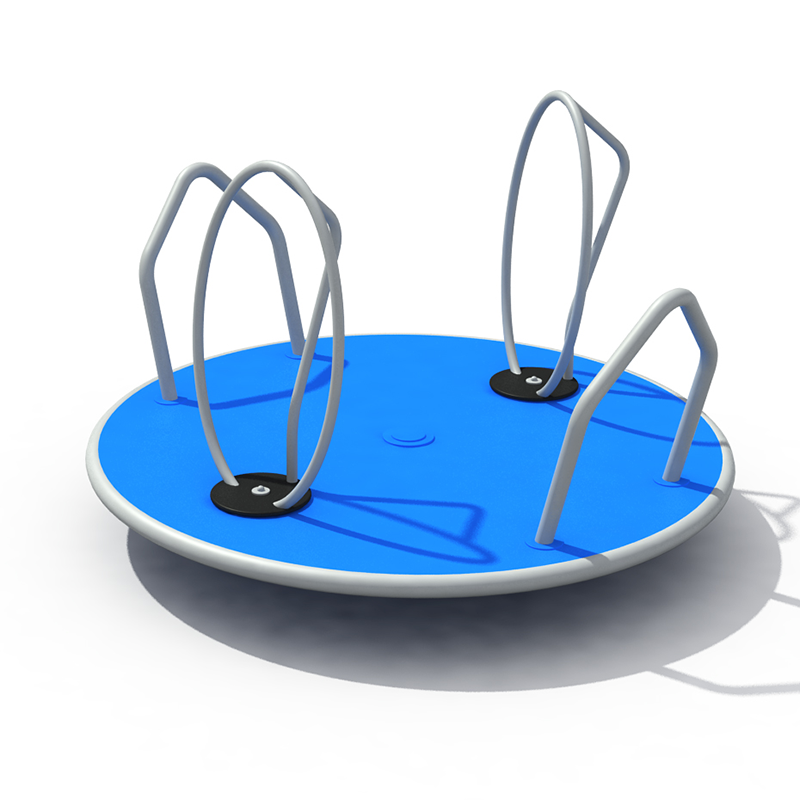
Post-installation inspection translates design intent into verified performance. Checks should confirm rotational smoothness under load, anchor rigidity during dynamic movement, and vertical alignment tolerance after curing or backfilling. Functional rotation testing helps detect hidden friction or eccentric motion. Early inspection also establishes baseline measurements for future comparisons, allowing deviations to be identified quickly and corrected before normal use introduces cumulative stress.
Installation records serve as a technical reference throughout the equipment lifecycle. Detailed documentation should capture anchoring type, embedment depth, torque values, alignment readings, and material specifications. These records allow maintenance teams to compare current conditions against original parameters. Consistent documentation improves troubleshooting accuracy, supports preventive maintenance planning, and preserves institutional knowledge as personnel or contractors change over time.
Installation quality directly determines how complex and predictable ongoing maintenance will be. When Playground Swivel Chairs start from a stable, well-aligned, and compliant installation baseline, routine inspections can focus on normal wear instead of corrective structural work. This greatly improves long-term safety efficiency and operational control.
| Installation Aspect | Impact on Ongoing Maintenance | Key Technical Indicators (Examples) | Units | Typical Applications | Practical Notes |
|---|---|---|---|---|---|
| Foundation stability (base & footing) | Determines settlement risk and long-term releveling needs | Concrete base thickness ≥ 300 mm; compressive strength ≥ C25 | mm / MPa | Public parks, high-traffic playgrounds | Must match verified soil bearing capacity; avoid casting on loose fill |
| Vertical alignment & centering | Affects rotation smoothness and bearing lifespan | Column vertical deviation ≤ 1/500 of total height | mm | Playground Swivel Chairs, rotating seats | Recheck after backfilling to prevent post-install drift |
| Anchoring system integrity | Controls frequency of retightening or structural repair | Anchor embedment ≥ 200 mm; pull-out resistance ≥ 5 kN (to be verified) | mm / kN | In-ground mounted equipment | Anchor material must be compatible with concrete and soil chemistry |
| Rotational shaft & bearing installation | Directly defines lubrication intervals and service life | Axial clearance ≤ 0.5 mm; radial runout ≤ 0.3 mm | mm | High-rotation playground equipment | Misalignment leads to uneven loading and premature wear |
| Fastener installation quality | Determines risk of loosening, noise, or vibration | Typical preload torque: M12 bolts ≈ 70–80 N·m | N·m | All structural and rotating joints | Use calibrated torque tools; avoid hand-tightening |
| Protective sealing & corrosion control | Influences inspection frequency and part replacement | Recommended protection level ≥ IP54 for moving assemblies | IP rating | Outdoor installations | Poor sealing accelerates bearing and fastener degradation |
| Integration with impact surfacing | Affects inspection access and trip-risk management | Height difference between rotating edge and surfacing ≤ 5 mm | mm | EPDM, rubber tile, poured-in-place surfaces | Must remain flush to preserve fall protection performance |
| Installation documentation & data retention | Enables accurate maintenance planning and traceability | Installation data completeness = 100% (drawings, parameters, dates) | — | B2B asset and facility management | Missing records increase diagnostic time and maintenance risk |
Tip:For B2B playground projects, linking installation quality metrics directly to maintenance KPIs is highly effective. Clear parameters, verified measurements, and documented installation data significantly reduce long-term safety uncertainty and total lifecycle cost.
Installation methods are core safety factors for Playground Swivel Chairs, shaping stability, rotation control, and long-term performance. Proper ground preparation, anchoring depth, alignment accuracy, and site placement work together to reduce risk and support predictable use. When installation follows technical best practices, maintenance becomes more efficient and safety remains consistent. Attract Playground Equipment Co., Ltd. provides Playground Swivel Chairs engineered for precise installation, offering durable structures, smooth rotation, and professional support that helps operators deliver safer, reliable playground experiences over the full product lifecycle.
A: Proper installation keeps a playground Swivel Chair stable, controls rotation, and protects users during active play.
A: A playground Swivel Chair needs level alignment, secure anchoring, and adequate clearance for safe rotation.
A: Ground preparation supports a Playground Rotating Seat by preventing settlement and maintaining predictable movement.
A: In-ground anchoring usually offers higher stability for a playground Swivel Chair under repeated rotational forces.
A: Yes, incorrect installation causes uneven wear, increasing inspection frequency and maintenance costs for Playground Rotating Seats.


